
tree-removal · Guthrie, OK
Removing an Oak and an Elm in Guthrie
A homeowner in Guthrie faced two distinct tree problems: an oak growing too close to the foundation of their home and a struggling elm showing signs of decline. Both situations posed risks to the property and surrounding landscape. Our team assessed each tree to determine the best course of action for safe and effective removal.
The challenge
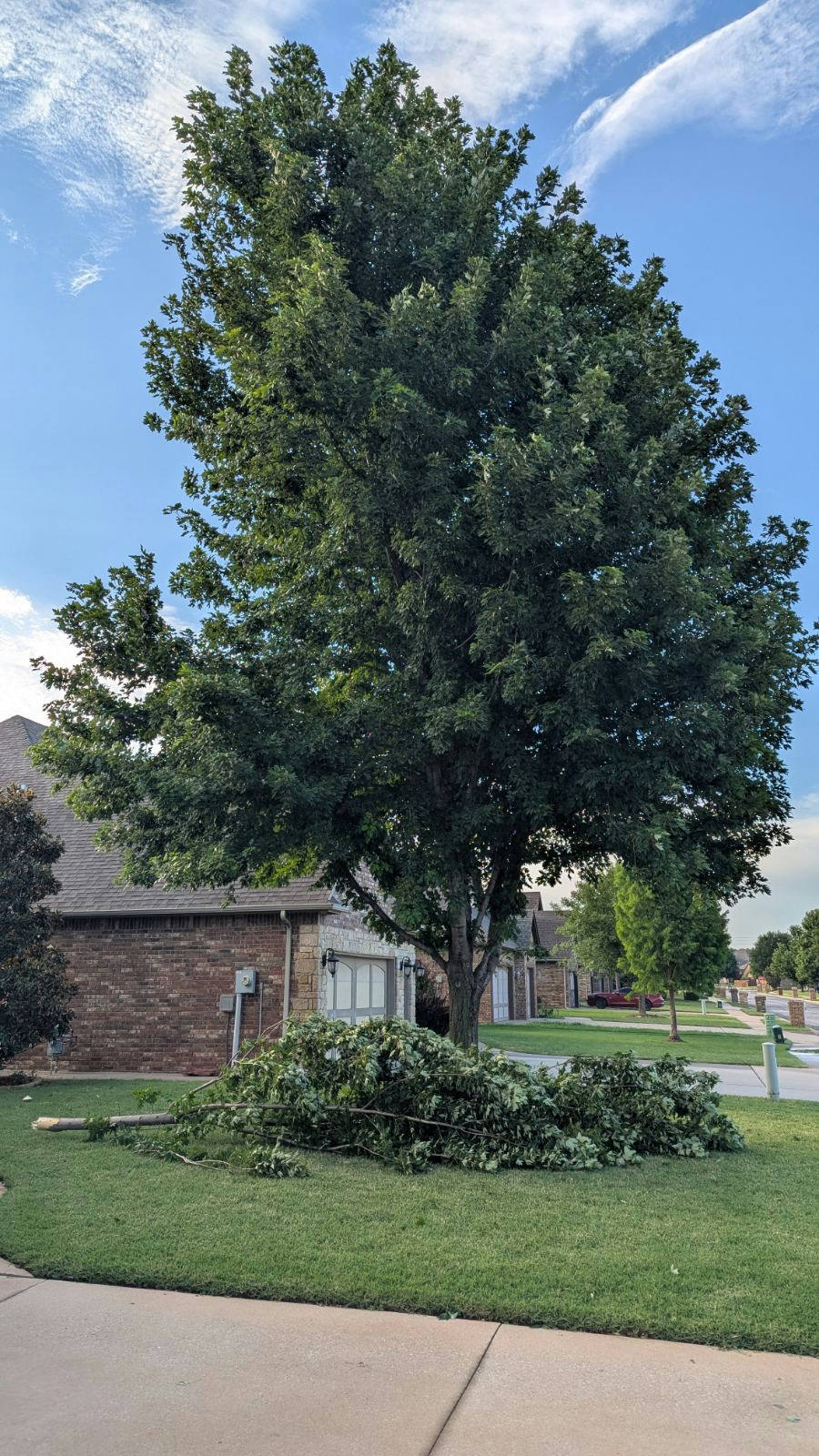
The oak tree stood prominently near the front of the home, its root system potentially impacting the foundation. Roots can exert significant pressure on structures, leading to cracks or shifting over time. Beyond the structural concern, a large tree so close to a building can increase fire risk and provide pathways for pests. The homeowner was understandably concerned about these potential issues. Separately, an elm tree on the property was visibly declining. Signs included thinning canopy, discolored leaves, and branch dieback. A dying tree can lose structural integrity, making it a fall hazard during storms or strong winds. It also attracts pests and diseases that could spread to other healthy trees nearby.
Our approach
The oak tree’s proximity to the foundation presented a clear risk. As the tree matured, its root system expanded, pushing against the concrete. This pressure, especially with soil moisture changes, can compromise a home’s structural integrity. Even without direct physical damage, large roots can consume moisture from the soil beneath a foundation, leading to settlement. The elm tree’s decline suggested underlying health issues. Common problems for elms in Oklahoma include Dutch Elm Disease, elm yellows, or stress from drought or soil compaction. A tree exhibiting these symptoms is not only an aesthetic concern but also a safety liability. As the wood decays, branches and even the entire tree can become unstable, posing a significant threat to anything underneath.
The result
Our ISA Certified Arborists began by evaluating both trees. For the oak, the primary concern was minimizing impact to the foundation and surrounding landscape during removal. We planned a controlled felling, segmenting the tree carefully to avoid damage to the house and nearby plants. Precision cutting and rigging techniques were essential to ensure each section was lowered safely. The elm tree required a similar careful approach due to its weakened state. We used climbing techniques to access the canopy, removing branches section by section. This method allows arborists to control the fall of each piece, protecting people and property below. Cleanup involved chipping smaller branches and hauling away the larger trunk sections, leaving the property clean and safe.
WHAT THE HOMEOWNER WAS DEALING WITH
The oak tree stood prominently near the front of the home, its root system potentially impacting the foundation. Roots can exert significant pressure on structures, leading to cracks or shifting over time. Beyond the structural concern, a large tree so close to a building can increase fire risk and provide pathways for pests. The homeowner was understandably concerned about these potential issues. Separately, an elm tree on the property was visibly declining. Signs included thinning canopy, discolored leaves, and branch dieback. A dying tree can lose structural integrity, making it a fall hazard during storms or strong winds. It also attracts pests and diseases that could spread to other healthy trees nearby.
THE PROBLEM: ROOT ENCROACHMENT AND ELM DECLINE
The oak tree’s proximity to the foundation presented a clear risk. As the tree matured, its root system expanded, pushing against the concrete. This pressure, especially with soil moisture changes, can compromise a home’s structural integrity. Even without direct physical damage, large roots can consume moisture from the soil beneath a foundation, leading to settlement. The elm tree’s decline suggested underlying health issues. Common problems for elms in Oklahoma include Dutch Elm Disease, elm yellows, or stress from drought or soil compaction. A tree exhibiting these symptoms is not only an aesthetic concern but also a safety liability. As the wood decays, branches and even the entire tree can become unstable, posing a significant threat to anything underneath.
HOW WE APPROACHED THE REMOVALS
Our ISA Certified Arborists began by evaluating both trees. For the oak, the primary concern was minimizing impact to the foundation and surrounding landscape during removal. We planned a controlled felling, segmenting the tree carefully to avoid damage to the house and nearby plants. Precision cutting and rigging techniques were essential to ensure each section was lowered safely. The elm tree required a similar careful approach due to its weakened state. We used climbing techniques to access the canopy, removing branches section by section. This method allows arborists to control the fall of each piece, protecting people and property below. Cleanup involved chipping smaller branches and hauling away the larger trunk sections, leaving the property clean and safe.
THE RESULT
With both the problematic oak and the declining elm removed, the Guthrie property is now safer. The immediate threat to the home’s foundation has been eliminated, and the risk of the failing elm causing injury or property damage is gone. The yard was thoroughly cleaned, with all debris removed, leaving a clear and improved landscape for the homeowner.
TREE ROOTS AND YOUR HOME’S FOUNDATION
Trees provide shade and beauty, but sometimes their roots can pose a threat to home foundations. This is a common concern in Oklahoma City and surrounding areas, where mature trees often grow near older homes. Tree roots are opportunistic; they seek out water and nutrients, and cracks or leaks in foundation pipes can draw them in. While roots typically do not break" sound foundations, they can exploit existing weaknesses. As roots grow larger, they can exert pressure on walls and slabs, leading to cracks. More commonly, roots extract moisture from the soil directly beneath a foundation. This can cause the soil to shrink, leading to differential settlement and cracks in the foundation or brickwork.
REPLACING TREES IN OKLAHOMA
After a tree removal, many homeowners consider replanting. Choosing the right tree for Oklahoma’s climate and soil is critical for long-term success. Our hot, dry summers, ice storms, and clay soils can be challenging. Selecting native or well-adapted species helps ensure the new tree thrives without creating future problems for your home or landscape.
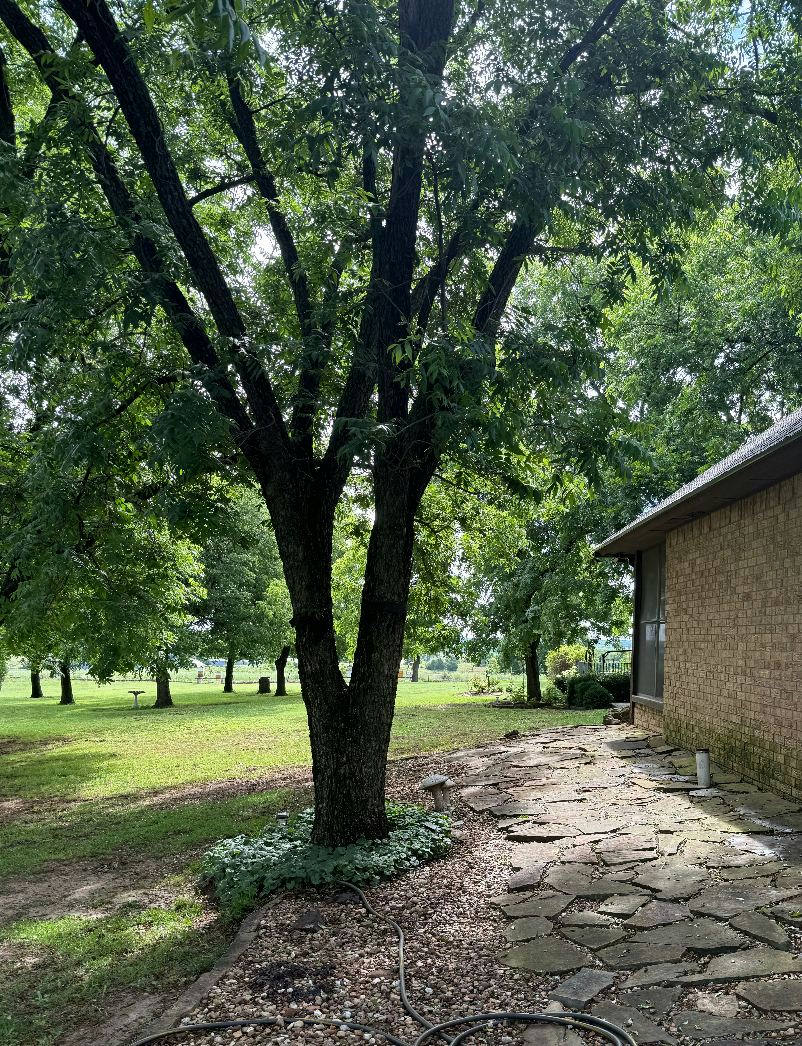
tree removal and preservation planning in the Oklahoma City metro
Next step
NEED TREE REMOVAL IN GUTHRIE OR THE OKC METRO?
If a tree threatens your property or is in decline, get a professional assessment. Call Arbor Image for a free estimate: (405) 815-7959.