tree-removal · Nichols Hills, OK
Removing a Diseased American Elm in Nichols Hills With a Crane
A homeowner in Nichols Hills faced a difficult decision. Their large American elm, a once majestic shade tree, was in severe decline and stood too close to their home, causing significant concern. This situation required precise planning and execution to ensure the property remained safe.
The challenge
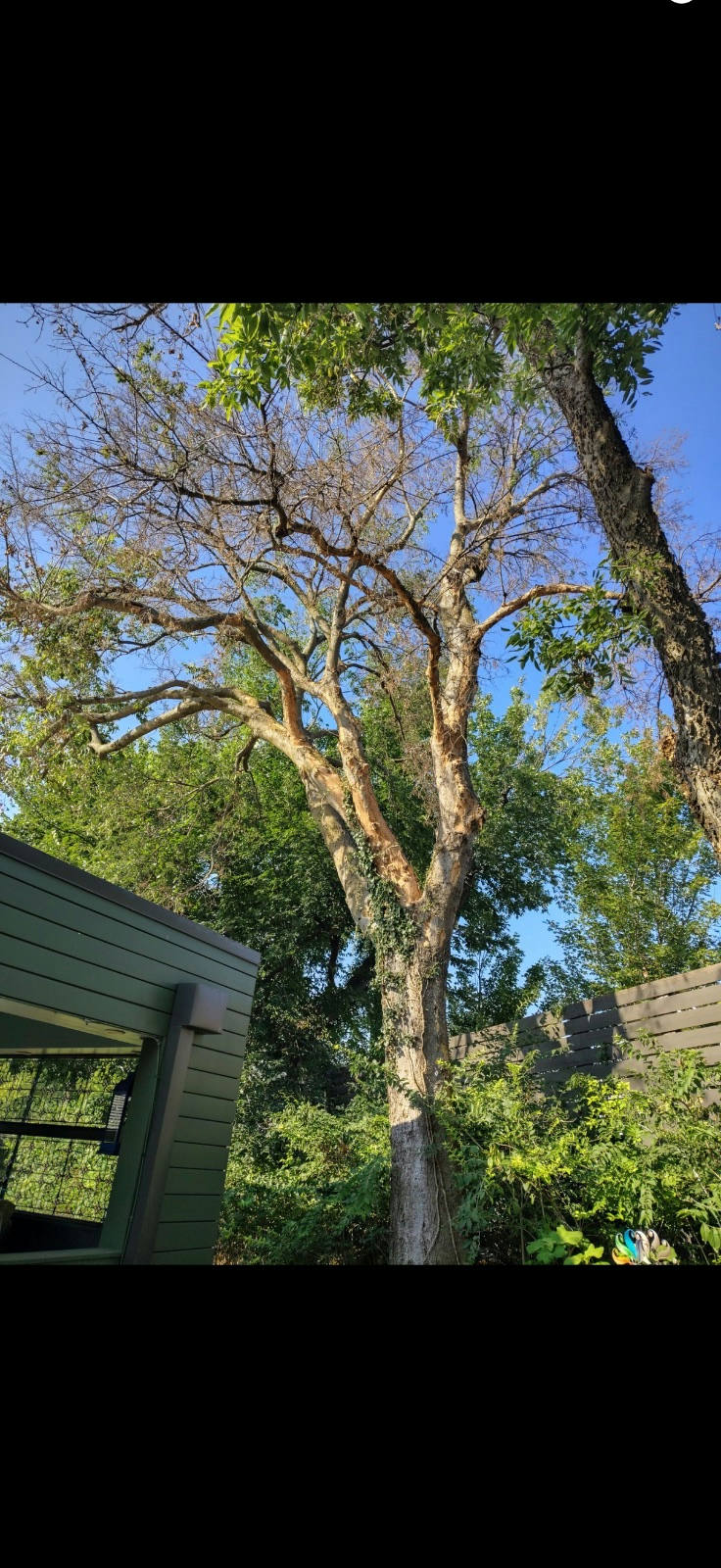
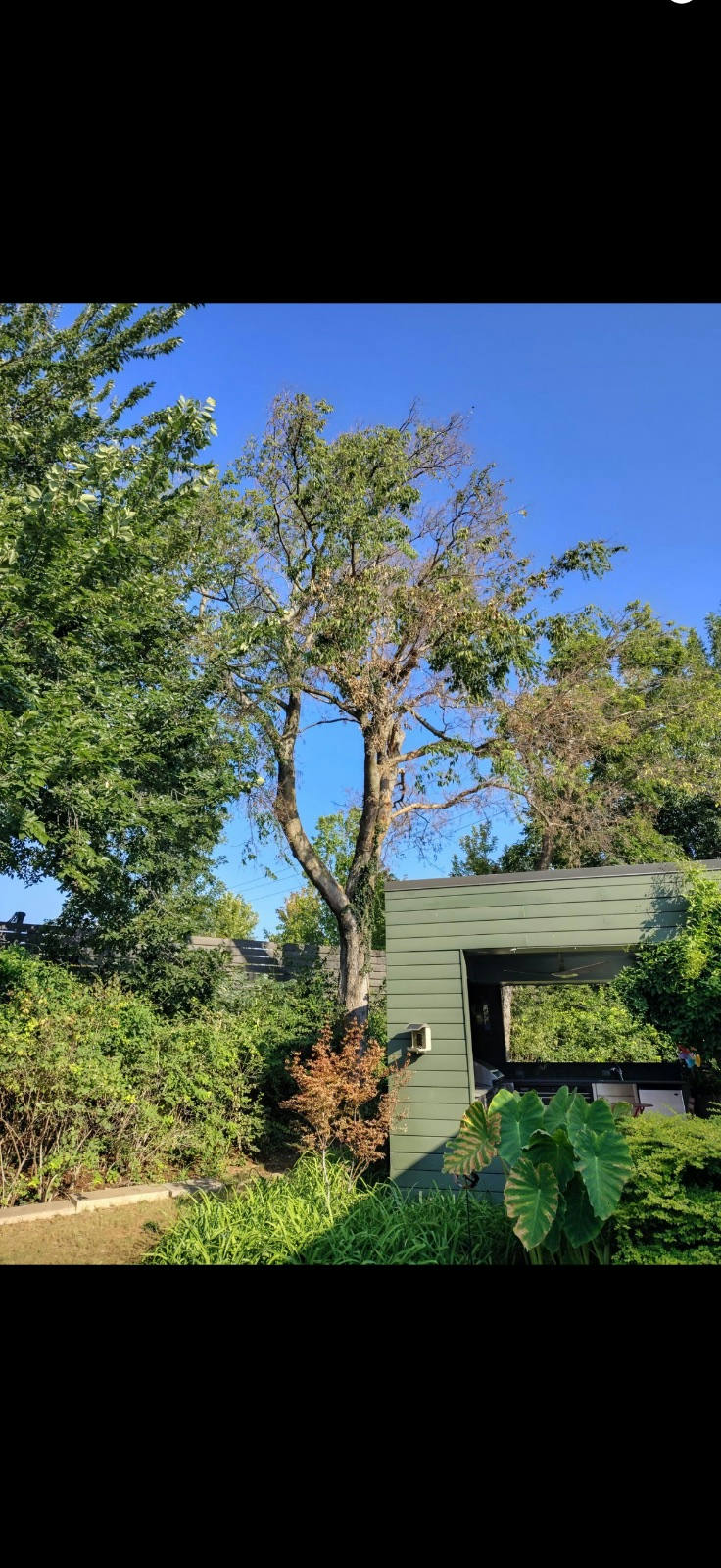
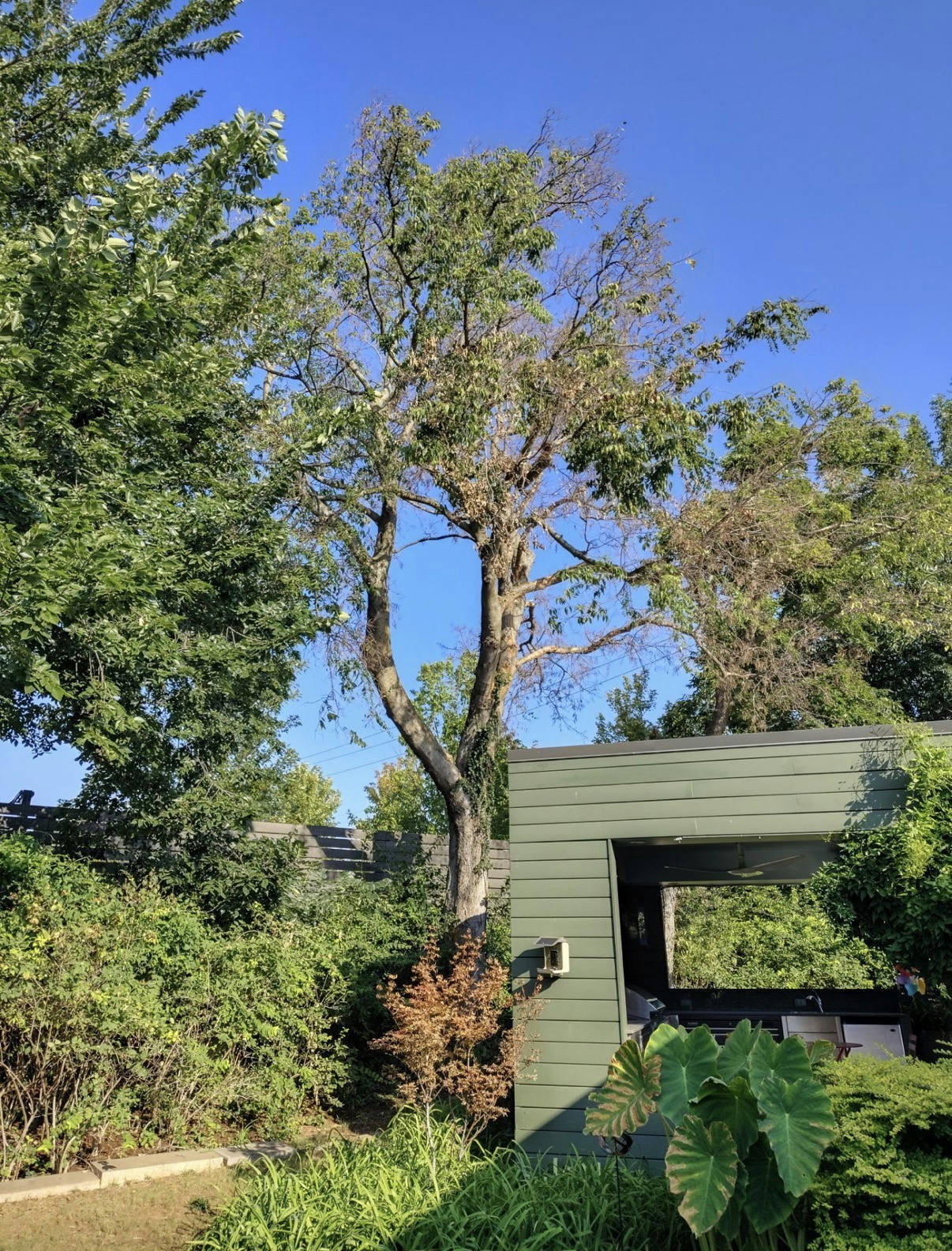
The American elm in this Nichols Hills yard was showing clear signs of advanced disease. Large sections of its canopy were bare, with dead branches extending over the house and yard. The homeowner had watched the tree’s health decline over time, and its proximity to their structure was a constant worry. They understood the tree was a hazard that needed addressing before it failed.
Our approach
American elms, while beautiful, are susceptible to diseases like Dutch elm disease, which can rapidly lead to decline and death. When a large tree dies, it becomes structurally compromised. Dead wood is brittle and unpredictable, making the tree a significant risk, especially when located near a home or other valuable structures. This elm showed extensive dieback, indicating its inability to recover. A tree of this size, with compromised structural integrity, presents a serious hazard. Branches could fall unpredictably, or the entire tree could fail during a storm. Addressing a diseased tree proactively prevents property damage and ensures safety. Ignoring it only allows the risk to increase over time.
The result
Given the tree’s size, its diseased condition, and its proximity to the house, a traditional felling or sectional removal with climbers alone would have introduced too much risk. Arbor Image determined a crane was the safest and most efficient method for this removal in Nichols Hills. A crane allows arborists to lift large sections of the tree away from the property in a controlled manner, minimizing risk to the home and surrounding landscaping. Our team rigged the crane to support strategic sections of the elm. Certified arborists then made precise cuts, allowing the crane to safely lower each section to the ground. This technique reduces impact on the yard and ensures the tree comes down without incident, piece by piece. The process required careful coordination between the ground crew, the climbers, and the crane operator to manage each section of the declining tree.
WHAT THE HOMEOWNER WAS DEALING WITH
The American elm in this Nichols Hills yard was showing clear signs of advanced disease. Large sections of its canopy were bare, with dead branches extending over the house and yard. The homeowner had watched the tree’s health decline over time, and its proximity to their structure was a constant worry. They understood the tree was a hazard that needed addressing before it failed.
THE PROBLEM WITH A DECLINING AMERICAN ELM
American elms, while beautiful, are susceptible to diseases like Dutch elm disease, which can rapidly lead to decline and death. When a large tree dies, it becomes structurally compromised. Dead wood is brittle and unpredictable, making the tree a significant risk, especially when located near a home or other valuable structures. This elm showed extensive dieback, indicating its inability to recover. A tree of this size, with compromised structural integrity, presents a serious hazard. Branches could fall unpredictably, or the entire tree could fail during a storm. Addressing a diseased tree proactively prevents property damage and ensures safety. Ignoring it only allows the risk to increase over time.
CRANE REMOVAL FOR CONTROL AND SAFETY
Given the tree’s size, its diseased condition, and its proximity to the house, a traditional felling or sectional removal with climbers alone would have introduced too much risk. Arbor Image determined a crane was the safest and most efficient method for this removal in Nichols Hills. A crane allows arborists to lift large sections of the tree away from the property in a controlled manner, minimizing risk to the home and surrounding landscaping. Our team rigged the crane to support strategic sections of the elm. Certified arborists then made precise cuts, allowing the crane to safely lower each section to the ground. This technique reduces impact on the yard and ensures the tree comes down without incident, piece by piece. The process required careful coordination between the ground crew, the climbers, and the crane operator to manage each section of the declining tree.
THE RESULT: SAFETY AND PEACE OF MIND
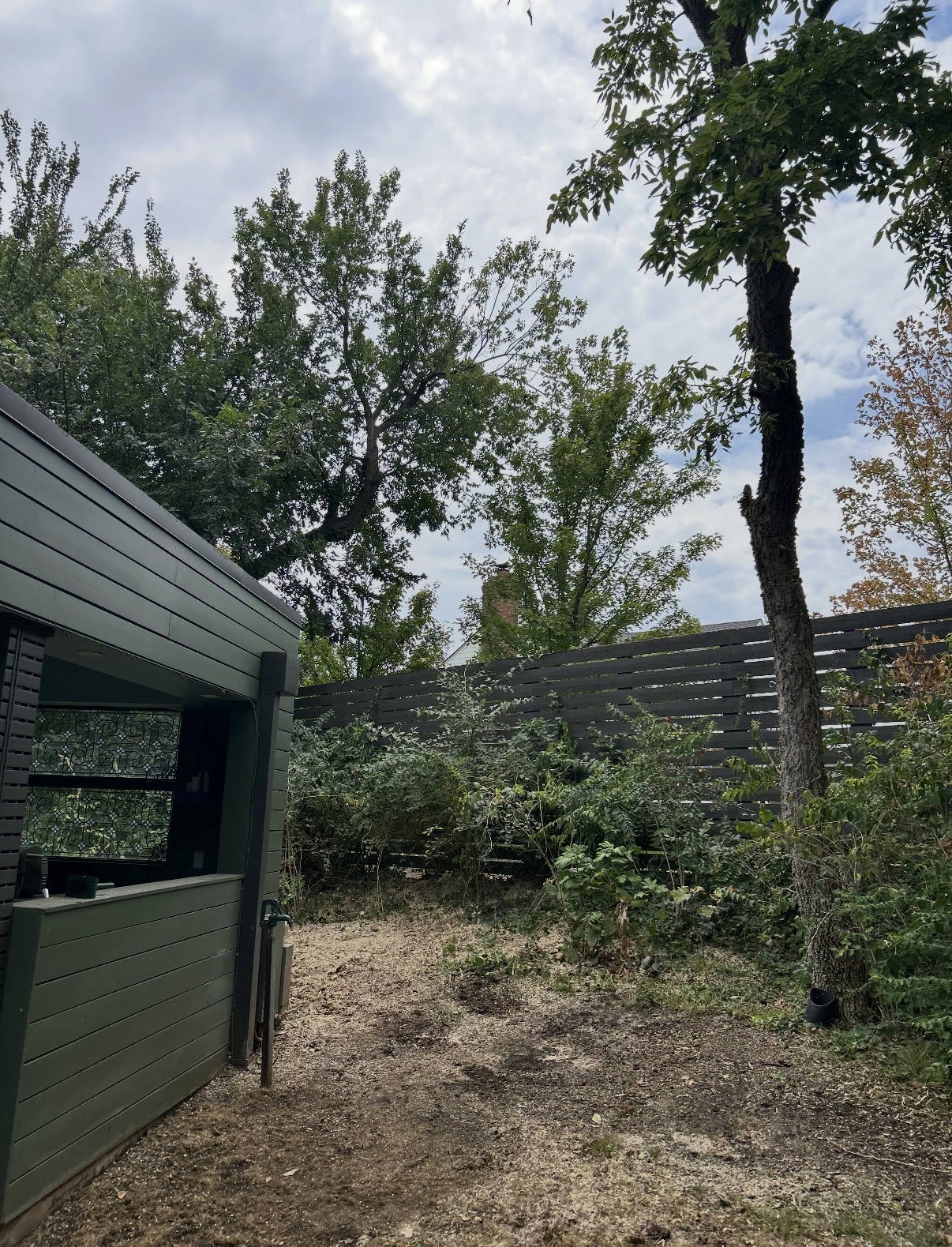
With the diseased American elm safely removed, the homeowner in Nichols Hills no longer faces the daily worry of a falling limb or tree failure. The property is now safer, and the yard is ready for new landscaping. Our team completed the job cleanly, removing all debris and leaving the site tidy. The crane allowed for an efficient and damage-free removal, restoring peace of mind to the homeowner.
DISEASED ELM TREES IN OKLAHOMA
American elms were once a dominant species in Oklahoma’s urban canopy. However, Dutch elm disease, a fungal infection, has devastated their populations across North America. The disease blocks the tree’s vascular system, preventing water and nutrients from reaching the canopy. Symptoms often include yellowing leaves, wilting branches, and extensive dieback, often starting in the upper canopy and progressing rapidly. Once an elm shows significant signs of Dutch elm disease, its prognosis is usually poor. While preventative treatments exist for healthy trees, severely infected trees often cannot be saved. They become hazardous as the wood dries out and becomes brittle. Early identification and removal of diseased trees can help prevent the spread of the fungus to nearby healthy elms.
tree removal and preservation planning in the Oklahoma City metro
Next step
NEED HAZARDOUS TREE REMOVAL IN NICHOLS HILLS?
If you have a large, diseased, or dangerous tree near your home, get a professional assessment. Call Arbor Image for a free estimate: (405) 815-7959.