
tree-health · Edmond, OK
Deep Root Feeding an Arizona Cypress in Edmond
In a residential neighborhood in Edmond, high-value landscape specimen trees were showing subtle early signs of nutrient deficiency and soil compaction. The landscape featured an established Arizona cypress, a young sycamore, and pine trees planted in dense clay soil. Our certified arborist team implemented a custom deep root feeding program to inject vital nutrients and mycorrhizae directly below the lawn root zone.
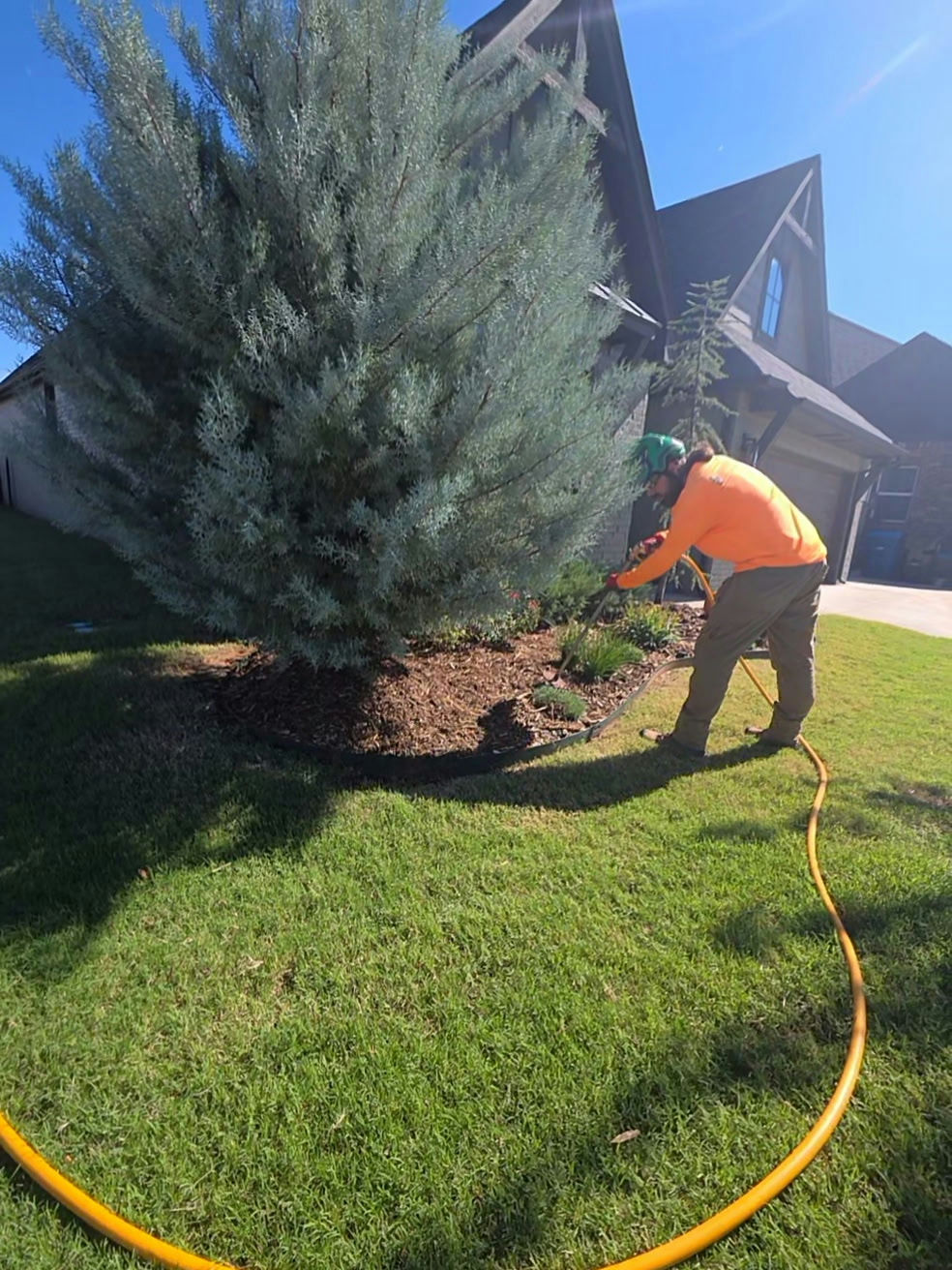
The challenge
The homeowners had invested heavily into their suburban Edmond property, designing a structured landscape that featured an Arizona cypress out front along with a young ornamental sycamore and pines across the backyard. In Oklahoma, establishing and sustaining specimen trees in newly developed neighborhoods poses unique challenges. Builders frequently scrape away topsoil, leaving behind heavily compacted red clay that restricts root growth. While the trees were established, growth had begun to stall during summer heat waves. The foliage on the Arizona cypress lacked its distinctive vibrant blue hue, and surrounding landscape beds were competing heavily with turfgrass and summer heat. The owners reached out to our certified arborists to restore vigor before pest pressure or stress-induced decline set in.
Our approach
Surface fertilization rarely accomplishes what woody perennials require. Turfgrass roots create a dense mat within the top two inches of soil, capturing broadcast fertilizer pellets before they ever reach woody root systems. Furthermore, standard lawn fertilizers are heavily nitrogen-weighted, which can force rapid, weak leafy flush on trees rather than resilient cellular structure. Beneath the surface, Edmond clay packs tightly under rainfall and foot traffic. Fine absorbing roots responsible for moisture and nutrient uptake sit between four and twelve inches deep. When clay becomes compacted, oxygen pore space collapses, starving roots of necessary respiration and causing slow root dieback. Without direct root intervention, root volume decreases, leaving trees prone to drought shock and winter burn.
The result
Our approach centered on targeted liquid injection using specialized soil probes. Rather than spraying the surface, we inserted root feeding probes eight to ten inches into the soil within the drip line of each tree, applying the solution at calibrated hydraulic pressure. This process fractures minor soil compaction while delivering a balanced blend of slow-release nutrients, humic acid, and beneficial mycorrhizae directly to active fine roots. For the Arizona cypress shown in the front bed, we worked carefully around the existing root flare and companion plantings. We spaced injection points two to three feet apart in a grid pattern extending to the outer canopy edge. We then repeated this method for the ornamental sycamore and boundary pines in the backyard, ensuring every specimen received deep hydration and root-level nutrition without disturbing decorative rock or mulch beds.
THE BACKSTORY
The homeowners had invested heavily into their suburban Edmond property, designing a structured landscape that featured an Arizona cypress out front along with a young ornamental sycamore and pines across the backyard. In Oklahoma, establishing and sustaining specimen trees in newly developed neighborhoods poses unique challenges. Builders frequently scrape away topsoil, leaving behind heavily compacted red clay that restricts root growth. While the trees were established, growth had begun to stall during summer heat waves. The foliage on the Arizona cypress lacked its distinctive vibrant blue hue, and surrounding landscape beds were competing heavily with turfgrass and summer heat. The owners reached out to our certified arborists to restore vigor before pest pressure or stress-induced decline set in.
THE PROBLEM WITH CENTRAL OKLAHOMA CLAY
Surface fertilization rarely accomplishes what woody perennials require. Turfgrass roots create a dense mat within the top two inches of soil, capturing broadcast fertilizer pellets before they ever reach woody root systems. Furthermore, standard lawn fertilizers are heavily nitrogen-weighted, which can force rapid, weak leafy flush on trees rather than resilient cellular structure. Beneath the surface, Edmond clay packs tightly under rainfall and foot traffic. Fine absorbing roots responsible for moisture and nutrient uptake sit between four and twelve inches deep. When clay becomes compacted, oxygen pore space collapses, starving roots of necessary respiration and causing slow root dieback. Without direct root intervention, root volume decreases, leaving trees prone to drought shock and winter burn.
HOW WE APPROACHED IT
Our approach centered on targeted liquid injection using specialized soil probes. Rather than spraying the surface, we inserted root feeding probes eight to ten inches into the soil within the drip line of each tree, applying the solution at calibrated hydraulic pressure. This process fractures minor soil compaction while delivering a balanced blend of slow-release nutrients, humic acid, and beneficial mycorrhizae directly to active fine roots. For the Arizona cypress shown in the front bed, we worked carefully around the existing root flare and companion plantings. We spaced injection points two to three feet apart in a grid pattern extending to the outer canopy edge. We then repeated this method for the ornamental sycamore and boundary pines in the backyard, ensuring every specimen received deep hydration and root-level nutrition without disturbing decorative rock or mulch beds.
THE RESULT
The targeted treatment delivered essential micro and macronutrients straight to the feeder roots with zero runoff and zero damage to the manicured turf. The hydraulic injection opened up pore space in the stubborn clay, allowing autumn rains to penetrate deeper. Over the following growing cycle, the foliage on the Arizona cypress deepened in color and density, and the backyard trees maintained healthy bud development heading into the dormant season.
DEEP ROOT FEEDING — WHAT OKC METRO HOMEOWNERS SHOULD KNOW
Urban trees do not enjoy the natural nutrient recycling of forest floors, where falling leaves rot down into rich organic humus. In suburban yards, fallen leaves are raked away, leaving trees isolated in heavy clay soils. Deep root feeding bridges that gap by replacing lost biological inputs directly where roots feed.
WHY ARIZONA CYPRESS AND PINES REQUIRE SPECIALIZED CARE
Conifers and evergreen trees planted across central Oklahoma endure harsh winds, alkaline or poorly drained soils, and sudden winter freezes. An Arizona cypress, while drought-hardy once established, requires specific soil conditions to avoid fungal pathogens and root stagnation.
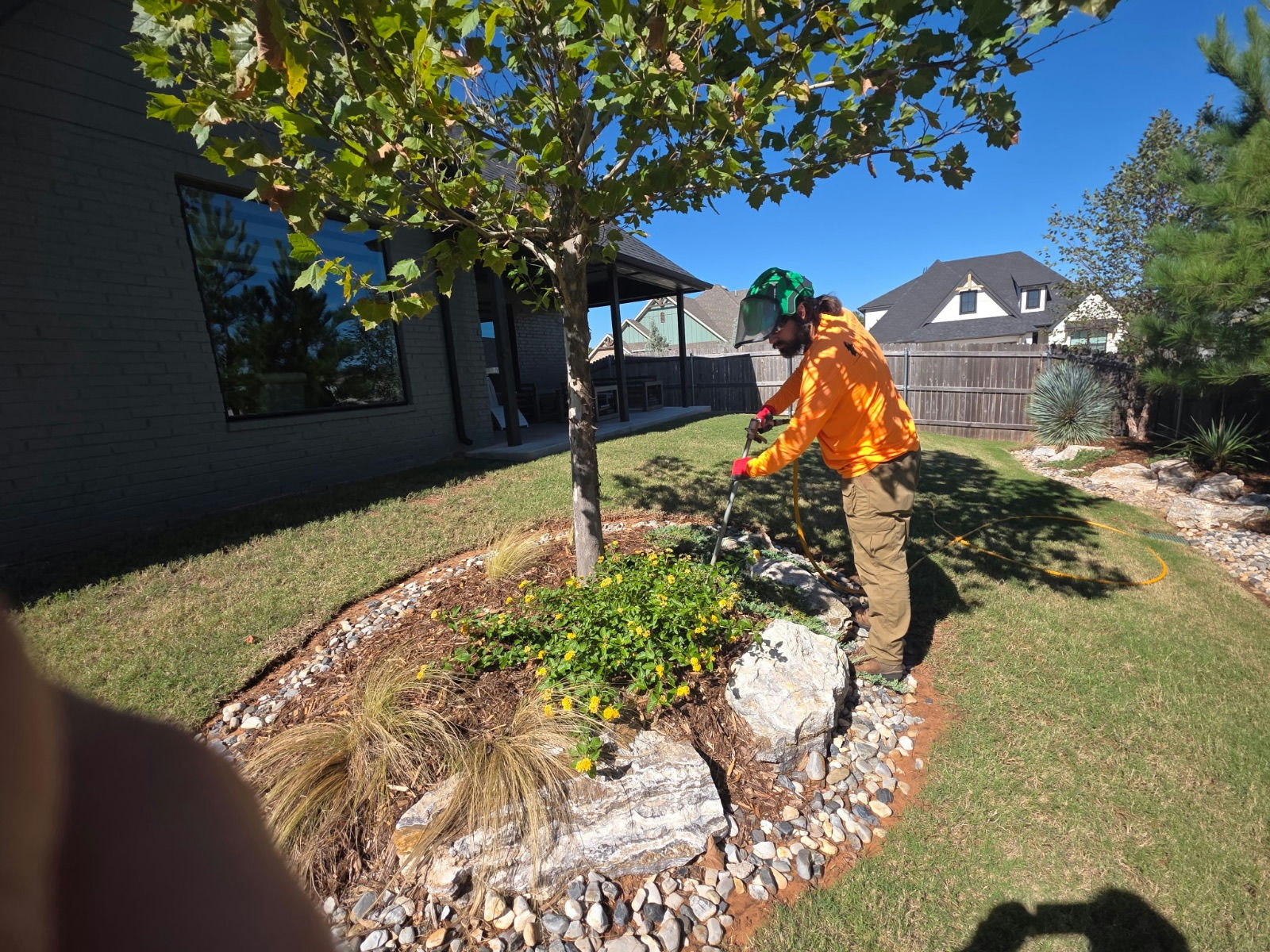
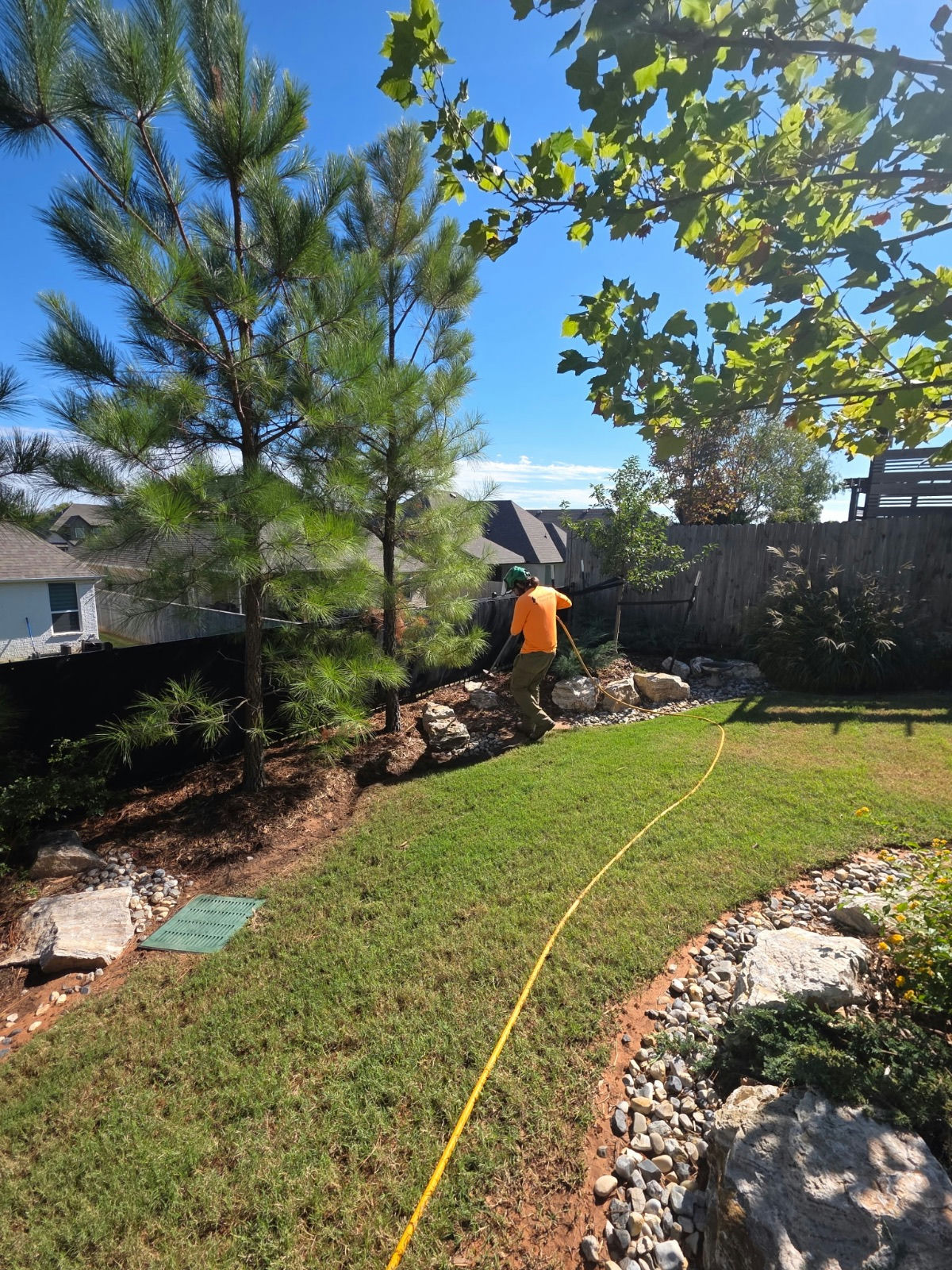
tree health and deep root fertilization in Edmond and Oklahoma City
Next step
SCHEDULE A TREE HEALTH VISIT IN EDMOND
Contact our certified arborists to evaluate your soil and schedule targeted root treatments. Call (405) 815-7959.