
Large, mature trees can add tremendous beauty, shade, and value to a property, but beneath the surface, their root systems may sometimes create unexpected problems.
Many homeowners don’t realize that tree roots can slowly spread toward foundations, sidewalks, driveways, and underground plumbing lines in search of water, oxygen, and nutrients. While trees don’t intentionally damage homes or pipes, certain conditions can allow the roots to exploit existing weaknesses in plumbing systems or place pressure on nearby structures over time.
Fortunately, early detection, strategic tree placement, and professional tree care can help homeowners avoid expensive repairs while still preserving healthy trees whenever possible.
Why Tree Roots Spread Toward Homes & Pipes
To understand how to protect your home, you have to understand why roots behave the way they do.
First and foremost, you need to note that a tree’s root system is not a mirror image of its canopy. In fact, roots often extend two to three times the width of the tree’s branches. So, just because a mature tree’s canopy won’t be brushing against your home’s siding, that doesn’t mean its roots won’t reach your home’s foundation. For this reason, it’s incredibly important to properly place trees around your home.
Additionally, roots are opportunistic. In the often-variable climate of Oklahoma, soil moisture can fluctuate wildly, and the soil beneath a home’s foundation or near underground pipes often stays more consistently moist and cool than the open yard. If the tree’s roots sense a moisture gradient (perhaps from a tiny pinhole leak in a pipe or condensation on a foundation wall), they will grow toward it. This biological drive, known as hydrotropism, ensures the tree survives, but it can lead those roots directly into conflict with your home’s infrastructure.
How Tree Roots Affect Plumbing Systems
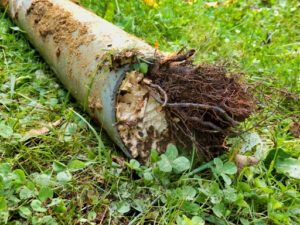
One of the most common underground root problems involves sewer and plumbing lines. Older plumbing systems are especially vulnerable because they may contain small cracks, loose pipe joints, or aging materials that allow moisture to escape.
When roots encounter these weak points, they may begin growing into the pipe. Once inside, roots continue expanding because the pipe provides a steady water source and nutrient-rich environment. Over time, this can partially or completely block the line.
Root intrusion in plumbing systems may lead to:
- Slow-draining sinks, tubs, or toilets
- Frequent clogs or backups
- Gurgling sounds from drains
- Sewage odors around the property
- Wet patches in the yard
- Repeated plumbing issues despite repairs
In severe cases, root intrusion can crack pipes further or contribute to pipe collapse. Clay pipes and older sewer systems are particularly susceptible to this type of damage.
Can Tree Roots Damage a Home’s Foundation?
Tree roots can sometimes contribute to foundation problems, but the situation is often more complex than many homeowners realize. Roots themselves do not typically “break through” solid concrete foundations. Instead, damage usually occurs gradually through pressure changes or shifting soil conditions.
- Soil Movement: Trees absorb significant amounts of moisture from the soil. During dry conditions, large roots may remove enough moisture to cause certain soil types to shrink or shift slightly. As the soil expands and contracts, portions of the home’s foundation may settle unevenly.
- Physical Pressure: In some situations, large surface roots may place pressure against sidewalks, driveways, patios, or shallow foundation areas. This can contribute to cracking, lifting, or uneven surfaces.
- Exacerbating Existing Structural Weaknesses: If a foundation already contains small cracks or structural vulnerabilities, nearby roots and shifting soil conditions may worsen the problem over time.
A professional evaluation is often necessary to determine whether roots are truly contributing to foundation concerns.
Warning Signs of Underground Root Problems
Because root-related issues occur below the surface, homeowners may not notice a problem until damage becomes more significant. Paying attention to early warning signs can help prevent costly repairs.
Some common indicators include:
Plumbing Warning Signs
- Slow or recurring drain clogs
- Multiple plumbing fixtures backing up at once
- Unexplained sewage odors
- Bubbling or gurgling drains
- Wet or unusually green patches in the yard
Foundation & Hardscape Warning Signs
- Cracks in driveways or sidewalks
- Uneven concrete surfaces
- Foundation cracks appearing or worsening
- Doors or windows sticking unexpectedly
- Soil shifting around the home
Tree-Related Signs
- Trees planted very close to the home
- Large surface roots becoming visible
- Rapidly growing trees near underground utilities
- Leaning trees or unstable soil conditions
How to Prevent Tree Root Damage
The good news is that homeowners can take several proactive steps to reduce the risk of root-related problems without sacrificing the health and beauty of their trees.
Choose the Right Tree for the Space
Strategic tree placement is one of the most effective prevention methods. Large trees should be planted far enough away from homes, sidewalks, driveways, and underground utilities to allow room for mature root growth.
Before planting, homeowners should research the mature size and root behavior of the species being considered.
Schedule Regular Tree Inspections
Routine tree health inspections can help identify potential issues early. Your arborists will assess root growth patterns, soil conditions, and proximity to structures in an effort to prevent problems from escalating.
Maintain Healthy Plumbing Systems
Older sewer lines should be inspected periodically, especially in established neighborhoods with mature landscaping. Addressing small leaks or pipe weaknesses early can help prevent root intrusion later.
Install Root Barriers When Appropriate
In some cases, root barriers may help redirect root growth away from foundations, sidewalks, or underground utilities. These barriers should be professionally installed to avoid harming the tree.
Address Soil Compaction
Compacted soil can alter root growth patterns and stress trees. Avoid heavy equipment or repeated traffic near root zones whenever possible, and invest in AirSpade services when necessary.
Prune Tree Roots
Proper root pruning can save your home’s plumbing and foundation. However, root pruning should only be performed by trained professionals because improper cutting can weaken or destabilize a tree.
Protect Your Property & Trees With Professional Tree Care
Are you noticing signs of root intrusion in your plumbing or foundation cracking? Arbor Image Tree Care can help evaluate the situation. Our team can inspect tree health, assess root growth patterns, recommend preventative solutions, and help you protect both your trees and property.
Contact us today for trusted tree care services and expert recommendations throughout Oklahoma City, OK.